Cracking the Obsidian Dome, Crushing the Black Carapace
I think of a live performance of Mohammad Reza Lotfi, from Italy.
I haven’t had occasion to write about it here, though maybe the time for that will come.
There’s a special quality to it setting it apart from his other performances – which says a lot, given Ostaad Lotfi’s gift for always bringing a special quality to his performances.
But the point is that, at its start, he addresses the audience – I should note, in an endearing way, and in a way that I think reflects the source of why he so readily seems to bring forth special qualities when he makes music.
Whereas when he performs, Lotfi seems to access a part of himself and to connect with something that not only gives him an aura and felt presence of majesty, but puts such a rich and various sofreh-spread of aesthetic-expressive means and modes before him as the host of our shared sound-feast …
… when he addresses the audience, he’s so unvarnished: stripped down to his unlacquered human essence, blinking slowly like a precocious but un-self-aware child asked to say a few words on stage, under the spotlight.
No ego there, just a quiet, slow, silent presence saying what he’ll play that night.
“The reason there isn’t anything in the brochures you got about what mode I’ll be playing in tonight is that, really… I don’t really know what I’ll play until it’s time to perform. Tonight I’ll play in Bayaat-e Esfahaan.”
Well, I sat down here tonight, having given myself about an hour to write (as I began to watch the early sunset shift the light quickly across the field of my vision), not only not knowing in what mode I’d like to express myself, but, really, not expecting to find myself in this position in the first place – which is to say, of “saying a few words,” or of needing to find a means and mode of doing so.
So often in the past, I’ve written here (and thought elsewhere, in silence and solitude, as I usually find myself) about mastery, improvisation, and connection to higher and greater sources, usually in the context of Qigong and traditional Iranian classical dastgaah music.
It’s notable, for what it’s worth – I’ll set this on the proverbial sofreh before you and between us, as an object of interest that we may return to in the course of further conversation, – that I write on the last day of the circumscribed zodiacal sector, or period, designated in some circles as Libra, while standing simultaneously on the precipice of the subterranean sector of the wheel, whose quickly downward-sloping entry-way is called Scorpio.
The good and the bad have been weighed, a breath of reflective appreciation has been drawn, and now I turn downward and inward. Here, the air is less sure, the breath bated, the step light, slow, and tender.
No telling what’s ahead, don’t you know.
Listen.
Astrology is full of people who… well, are charlatans – slick-talking salesmen and cynical cultists – and who – despite all their credibly framed expositions (and exegetical discourses) on the finer aspects of their interpretive language, the nature of the qualities and the dynamic mechanics of the various celestial lights and their energies (or Qi), and how these both correspond with and “lawably govern” mundane events and expressions of Qi – can’t seem to find real happiness, or peace, or joy, or lasting prosperity, or practically valuable predictive power.
The longer I look at it, the more I see it.
But, even so, I’m too thoroughly steeped in the practically-experienced and -observed functioning of Qi on all levels accessible to me – within myself, in my broader life-trajectory, in the events that happen to me in uncanny ways, and in phenomena I observe in the natural world around me – that I have to aver, without wavering, that if one really pays attention, Qi most definitely is real, describable (meaning, it has regular features that can be reliably observed, experienced, and categorized), predictable, and follows certain cycles and patterns that have been the object of keen interest in all the greatest civilizations of all time, with good reason.
And that means that not only do the cyclical changes of celestial lights (including the sun, which is the most obvious example anyone should have noticed at some point, but also certain stars and the planets) create a predictable series of effects that ripple outward, in unique but corresponding resonance, in all fields and tiers of being, from elemental, to mineral, to vegetative, animal, and even human being, but, well, when we understand this system of correspondences, we can adjust things, from the most literal and physical levels (like moving objects in a home or landscape), to ever more abstract levels (like clothing and jewelry, to manner and content of speech or expression, to emotions cultivated and expressed, to spiritual practices imbibed and incarnated; and through the resonance that creates, we can conduct some energies better, while diverting, dampening, redirecting, or mingling others to produce a specific effect.
Like a writer or painter or cook, we can poetically improvise, or create an image, or compose a meal that will create the desired effect, using the ingredients at hand.
But…
What I see among even (or especially) the most eloquent and persuasive of these astrologers is, despite all that, a failure to use that system to bring forth anything truly, deeply, sustainably positive, in a practical and objectively valuable sense.
Is that an indictment of their knowledge-system?
No.
I think it’s an indication that that high system of celestial luminaries, predictable and all-pervasively influencing as it is, is not the ultimate authority, speaking of outcomes of efforts and desires.
No amount of adjustments of the flow of celestial emanations and radiations, by whatever means, and no level of harmonic-sympathetic resonance with whatever vibrational state embodied (literally or archetypically) in a planet or star is going to give you lasting happiness, peace, joy, success, or abundance in this world.
You can’t hack the software (or hardware) and make the program run however you want.
I think this all points to the fact that – and I’ll just cut to the point, crassly, uncharacteristically, without the massaging and pomp usual to the occasion – well, there is a God.
And, moreover, he’s not an energy-information system (or Qi Field, in a certain terminology) that you can hack to gratify your desires ad libitum.
And if he’s not that, then what is he?
Again, I’ll skip the massage, the curlicues, and the puffs of prosodic perfume from a silk-lined pig’s bladder, splatter-squoze in yer face like some high end prostitute-fart.
I think “all signs point to Christ.”
Put that in your Magic 8 Ball and smoke it, chumly.
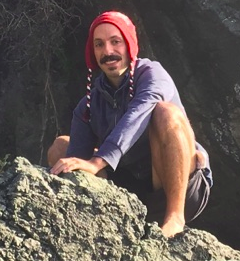
I say this as a shoeless, leather-soled hobo, a wandering itinerant squatting by the trashcan in the alley, piecing some things together from the shadows and streetcorners – poetically speaking.
So: I don’t have a soapbox to stand on, and you can give me the wide berth due to a raving bum. I won’t even ask you to spare a quarter, pal.
What have I been doing since I last wrote? When was that? July?
At Spring Forest Qigong, I used to compare healing to gardening for certain clients I interacted with – the ones that I felt the metaphor would connect with.
I’ll spare (or deny) you the usual rhetorical flourish – just steamed vegetables, no seasoning, tonight – and give you the summary.
I’d point out that healing was like gardening.
We all want the fruit – well-watered, green lawns of springy turf; rolling hills of flowers; well-maintained, herb-lined rustic stone footpaths; trees laden with ripe, juicy fruit; and a menagerie of animals making their homes and music amid it all.
But that’s end-stage gardening, the nice 10% above ground at the end of a long journey.
The 90% journey to that point, serving as its foundation, is blood, sweat, and tears (and I’d add, arthritic joints, stiff muscles, and an endless headache), directly related to digging up rocks, cutting down dead wood, uprooting weeds endlessly, and a tremendous investment of your life-essence in various forms.
You could say that’s the dread, toil, and terror in darkness, underground.
Just to clear away what’s dead and useless, or to pierce and turn over the soil many times before sowing a single seed, can be months or years of work; and from that perspective – that long one, deep in the lightless trench, – the whole thing can seem endless, fruitless, confining, restrictive.
Look at me, I got a bit rhetorically free and loose, didn’t I?
Somethin’ loosened me tongue, didn’t it?
Well, all that’s to say…
I’m told there’s a Chinese saying that if you want to be a millionaire, work hard, and if you want to be a billionaire, use feng shui: that is to say, tap into that system of manipulation of and resonance with celestial radiations and emanations, lawably governed in an eternal, impersonal cosmic process.
Maybe.
But from where I stand – whether you’d like to call it in the narrow trench or by the oildrum trashfire in the alley behind the big building, – the light that hits my eyes (not yet wholly bleary, I assure you, and clearing by the day) shows that as a half-truth.
Work hard, and you certainly can become a millionaire.
I think it’s still possible, with tremendous effort, intelligence, cleverness, and with some good luck, good connections, and even conscious or unconscious wave-riding of celestial emanations.
Those who become millionaires, sometimes have a nice mix of all those things, knowingly or unknowingly.
But billionaires?
It ain’t astrology, and they know it.
It’s vice, corruption, and immorality, on some scale or other.
A Qigong teacher that I respect said, speaking in the context of abject poverty he had observed firsthand, and I paraphrase: You can’t have an overabundance of one thing in one place without a corresponding lack in another.
Yeah, you can nit-pick and counter-argue, and I’m sure you can find airtight counter-examples.
But I’d say that’s a basic Spring Forest Qigong healing principle: sickness is a result of imbalance of Qi.
This principle scales up: you can see it in the body, you can see it in the nation, you can see it in the world.
Liberal, conservative; Democrat, Republican; left, right: all these names and labels and arbitrary distinctions mean nothing.
That’s all a level and layer of perceptual control obscuring a clear sight of what’s really going on. It’s a kind of word-magic, spell-binding: psychological manipulation with corresponding, lawably-produced effects rippling outward into grosser planes of consciousness shown forth as physical being.
It used to be called “black magic” in more sober times, a more straightforward naming of things, cutting straight to the heart of the matter.
Truth is simple, clear.
What am I saying?
What AM I saying?
Who knows?
Sometimes Lotfi doesn’t know what he will play when he steps on stage to perform.
And now I think of what I recently heard a musician in the classical North Indian system (so akin to the Persian classical dastgaah system) say – and I paraphrase:
This kind of music doesn’t explain itself. You have to come to it as it is, bringing the fullness of your being and presence to it. In time, you can attune to it and enter its being-space, and then understanding can arise – and with it, a communion and communication.
What have I been doing since I last wrote?
I’ve been watching myself age.
I’ve been pushing myself in ways I haven’t done before.
I’ve been getting stronger physically, and I’ve been learning what arthritis means.
I’m also healing from all of that, and finding my mind and emotions are transforming (with the requisite attendant heat and sometimes noxious fumes proper to the alchemical transmutation-process).
My head’s being held under water, again poetically speaking, to teach me the meaning of uncertainty, endurance, and submission to what is (and what might be hoped for).
What can I say?
Gurdjieff said that the human organism is like a cart designed to ride over bumpy, uneven, potholed roads, the very nature of the percussive shocks that that sort of movement entails and generates being salutary and necessary to the persistence and proper functioning of the cart.
Or, as he also said, to become fully human, one must labor consciously and suffer voluntarily.
Or, as Christ said, “Whosoever will come after me, let him deny himself, and take up his cross, and follow me.”
I suddenly remember Basil the Fool for Christ, a naked, leather-soled hobo, mumbling and crying to himself in the alleyways, tipping over merchants’ pastry and drink carts, and being beaten for his idiocy… the companion and chastiser of kings, glorified saint, emblem of meekness, exalted spiritual luminary shining his light down on the earth, down through the centuries.
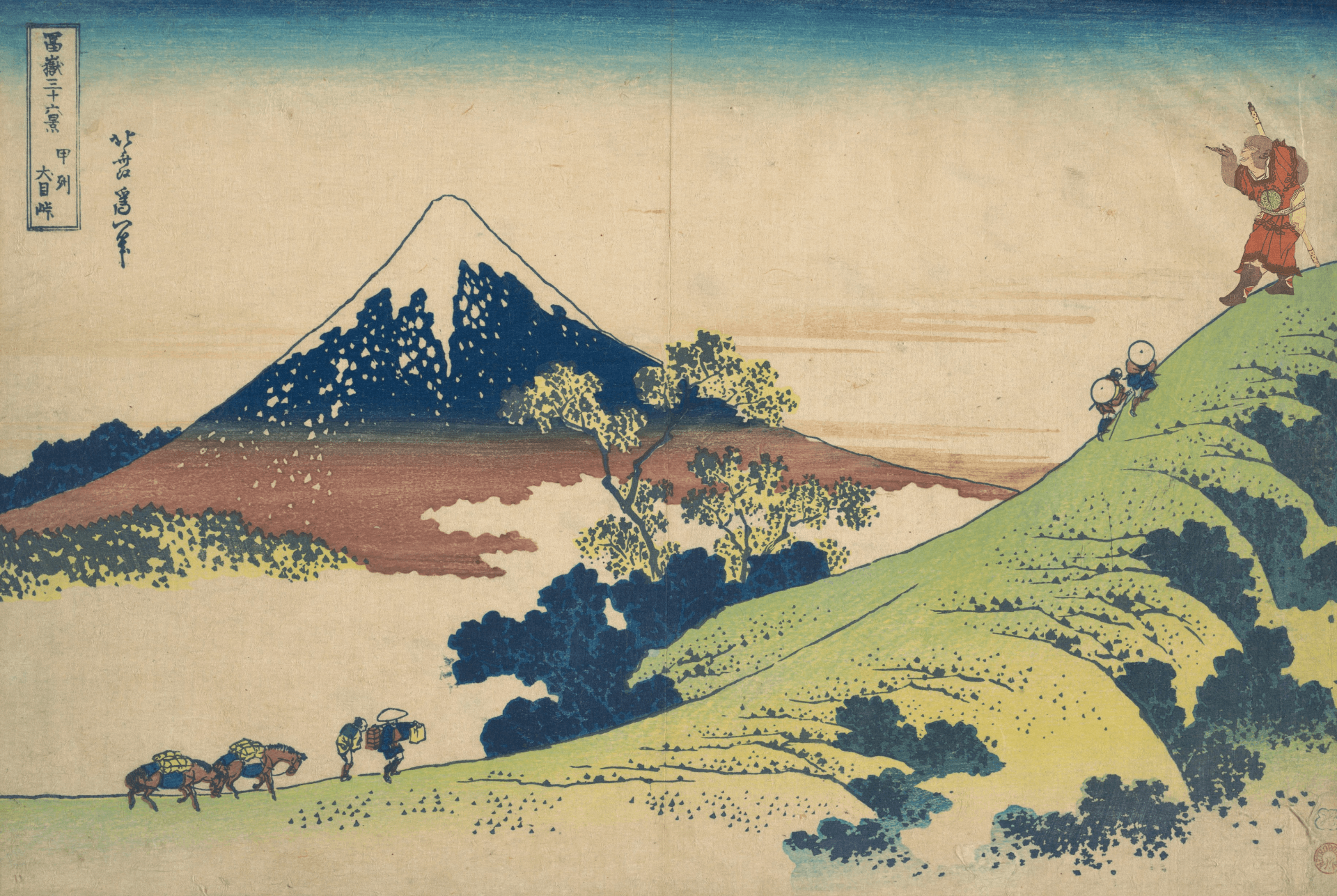
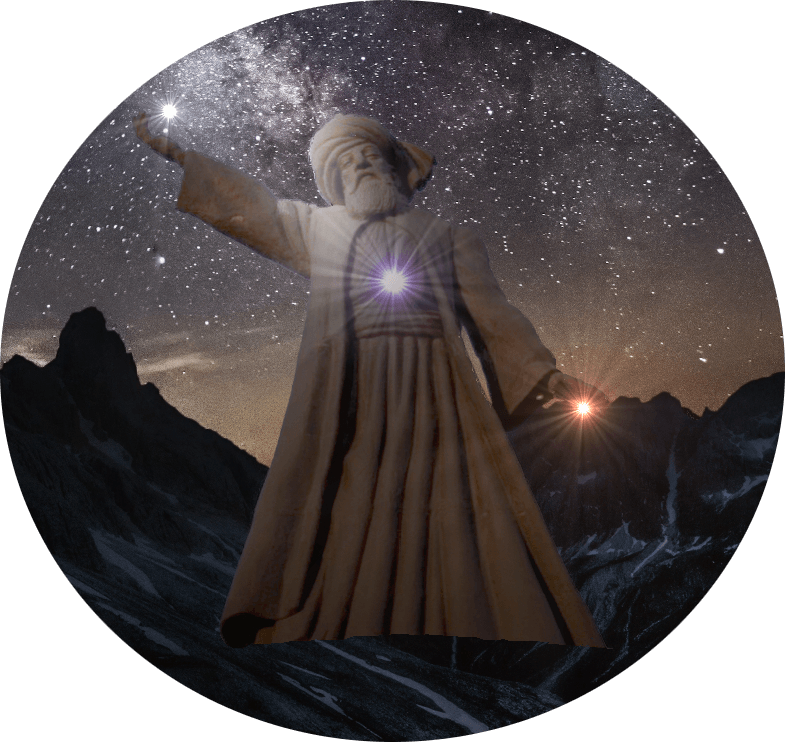
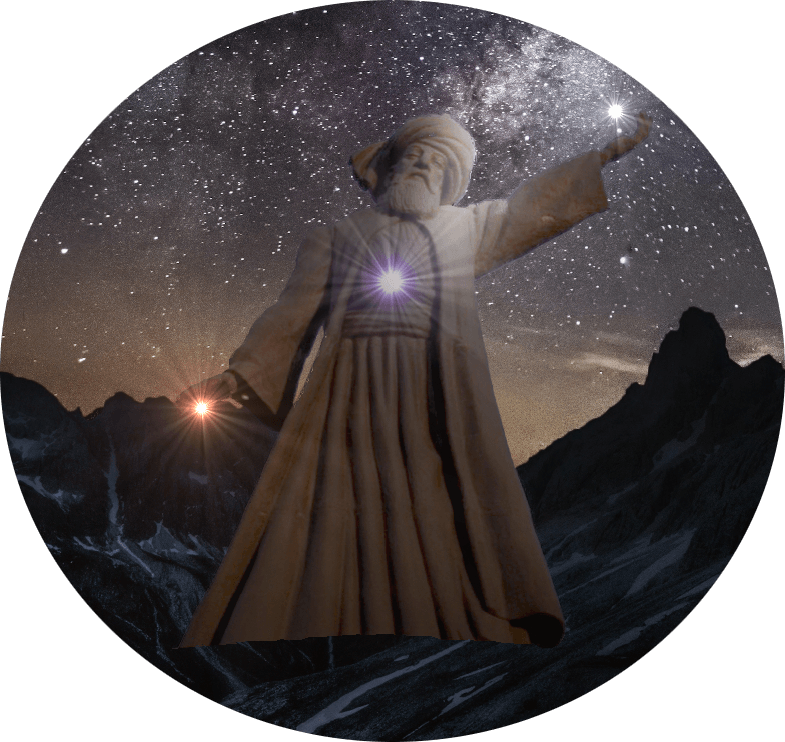
May all supine, naggin-nippin’ hobos rise up from their alleyway cardboard-sepulchers and find new life in an undying oil-drum fire kindled by the light of such a selfless luminary, though other stars above shine down cold, hard, and distant in an impenetrable obsidian-black dome over a hoarfrost-hard, pitch-paved grave-scape.
And let us remember: though we be shoeless, hapless hobos, ears ever (and endlessly) pricked to catch the cry of the long longed-for glory train and its straw-lined sleep-cars, power is given unto our leathern soles, hobbling on this side of the tracks, to tread on scorpions and snakes alike, and on all other dark powers – “and nothing shall by any means” hurt us.
“O Death, where is thy sting?”
The crushing of serpents’ skulls under the hobos’ heels shall be as fire-crackers sounding the new year, cracking the dread obsidian dome of the midwinter heavens with many bright lights.
The cracking of scorpions’ dark carapaces underfoot shall be as the crackling of a genial fire in warm hearths on a cold winter’s night.
See you on the other side of the great celestial wheel, or when you least expect it.
22 October 2025